

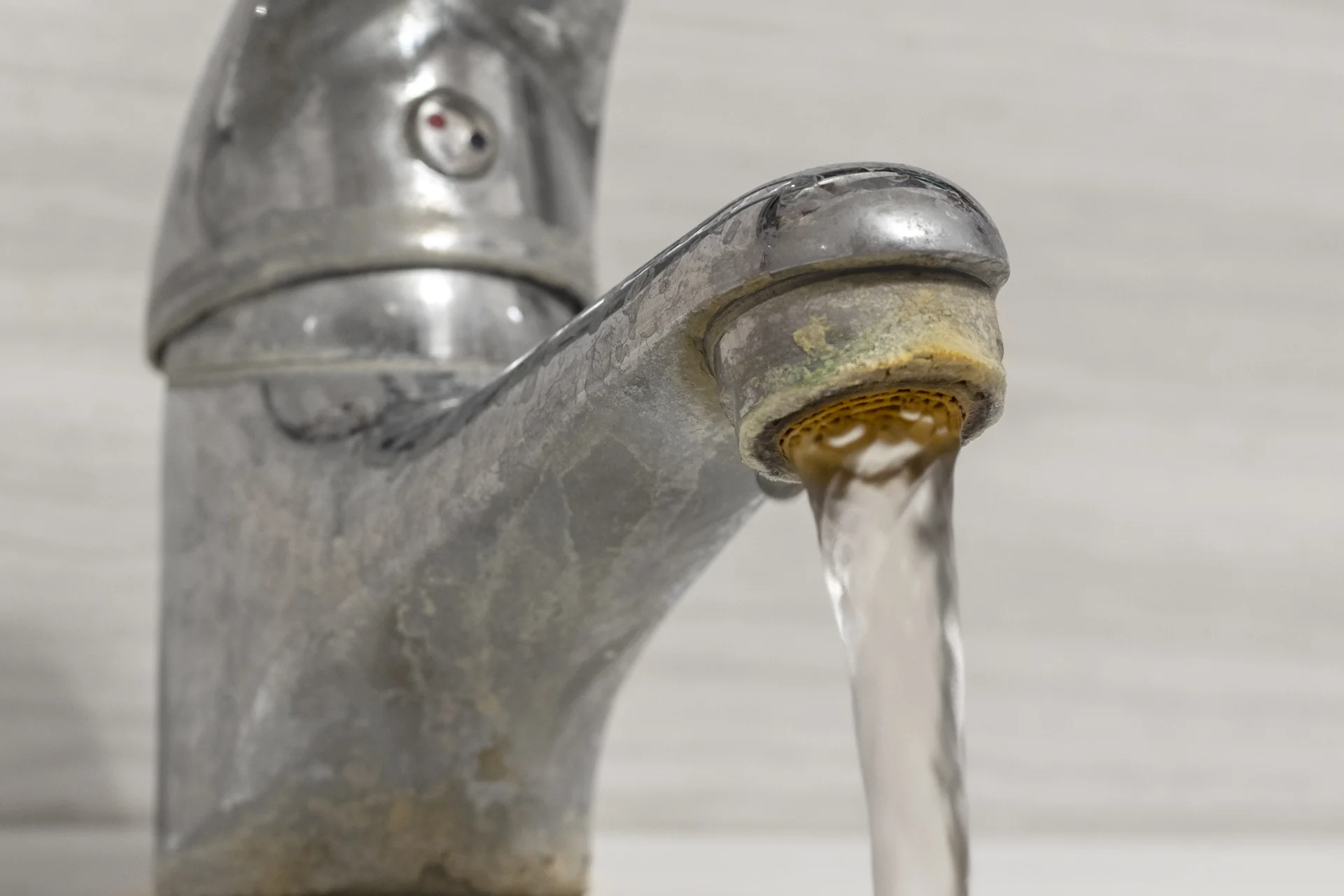
If your tankless water heater has started delivering lukewarm water, or your energy bill has crept up without an obvious explanation, South Bend’s water supply is a likely contributor. The City of South Bend Department of Public Works measured water hardness in 2024 at an average of 369 parts per million as calcium carbonate, ranging from 282 to 470 ppm roughly 22 grains per gallon. For context, the Water Quality Association considers softening strongly recommended once hardness crosses 12 grains per gallon. South Bend’s water sits nearly twice that threshold on an average day.
This isn’t a new problem. A 1962 U.S. Geological Survey study of the 100 largest American cities found South Bend’s water supply had the highest concentration of calcium and bicarbonate ions in the country. Decades later, the city’s own 311 knowledge base still classifies all local water as very hard, citing an average of 19 to 24 grains per gallon. We’ve been repairing and maintaining heating and plumbing systems in this community since 1957, and what the water does to equipment over time is something our technicians see on nearly every service call.
Tankless units are marketed as low-maintenance, and compared to traditional tank heaters, they do scale more slowly. Water spends less time inside a tankless heat exchanger because it’s heated on demand rather than stored. But “slower” doesn’t mean immune, and at South Bend hardness levels, the margin shrinks considerably. Understanding the mechanism helps you know what to watch for and when a flush won’t be enough.
How Hard Water Damages a Tankless Unit From the Inside
When cold water enters a tankless heater, the heat exchanger raises it to the target temperature almost instantly. That rapid heating causes calcium and magnesium minerals to precipitate out and bond to the heat exchanger’s internal surfaces. The result is limescale, a hard mineral crust that builds layer by layer each time the unit fires.
Limescale conducts heat poorly, so a coated heat exchanger has to work harder and run longer to deliver the same water temperature it once reached easily. The unit compensates quietly by consuming more gas or electricity, and you may not notice until the buildup becomes significant and the obvious symptoms appear.
Left unaddressed long enough, scale restricts water flow through the heat exchanger’s narrow passages. Reduced flow causes the unit to overheat internally. Most modern tankless heaters respond by triggering a safety shutdown, which shows up as a scale-related error code on the display rather than a gradual loss of hot water. At that stage, the question isn’t just whether to flush the unit. It’s whether the heat exchanger itself has been damaged.
Warning Signs Your Tankless Heater Is Fighting Scale Buildup
Some warning signs are manageable with a descaling flush. Others indicate that damage has already occurred and a flush alone won’t restore normal operation. Knowing the difference saves money and keeps a maintenance issue from becoming a full replacement.
These signs suggest scale buildup that a flush may resolve:
- Weaker hot water flow at faucets and showerheads, particularly after the heater has been running for a few minutes
- Temperature inconsistency where you need to set the dial higher than before to reach the same comfort level
- Popping, cracking, or rumbling sounds from the unit while it’s running, which signal mineral deposits forming on heated surfaces
These signs suggest the heat exchanger may already be affected and need professional diagnosis:
- Persistent error codes that return shortly after a flush or reset
- Hot water that cuts out entirely mid-use rather than just running cooler
- Visible corrosion or discoloration around fittings and connections near the unit
The first group often responds well to a descaling solution flushed through the system with a pump and recirculating hose. The second group warrants a closer look at the heat exchanger before spending money on a flush that won’t fix the underlying problem.
Descaling Schedules & Water Softeners: What Actually Protects Your System
Industry and manufacturer guidance typically recommends descaling once a year in moderately hard-water conditions. At 22 grains per gallon average, South Bend’s water isn’t moderate. Every six to nine months is a more realistic interval, and homes at the higher end of the city’s hardness range should lean toward the shorter end of that window.
Descaling addresses the buildup that’s already there. A whole-home water softener addresses the source. A softener removes calcium and magnesium before the water reaches the heat exchanger, which dramatically slows scale formation. Homeowners who install a softener ahead of their tankless unit often find they can extend service intervals and reduce the risk of heat exchanger damage over the life of the system. If you’re already committed to a tankless heater in South Bend, a softener isn’t a luxury add-on. It’s practical protection against water the city itself classifies as very hard.
Our plumbing team installs tankless water heaters, performs water heater repairs, and handles replacements as part of our full plumbing services. When your system develops a problem, we can evaluate whether a descaling service will resolve it or whether the heat exchanger damage has gone further.
When to Call for Professional Tankless Water Heater Repair
Scale damage is one of the more preventable equipment failures we see, but it gets more expensive to reverse the longer it runs. Catching the problem early, when symptoms are still in the “weaker flow and odd sounds” stage, keeps the repair simple. Waiting until the unit throws repeated error codes and shuts down mid-shower moves the job into a more involved diagnosis, sometimes ending in full unit replacement.
Our NATE-certified technicians assess whether a descaling flush can restore normal operation or whether the heat exchanger has already been affected by overheating. You’ll receive a clear explanation of what we find and upfront pricing before any work begins. No guesswork about what the repair will cost. If South Bend’s hard water is taking a toll on your tankless system, Great Lakes Heating & Air Conditioning is available around the clock at (574) 498-7556.